Instrument Rating
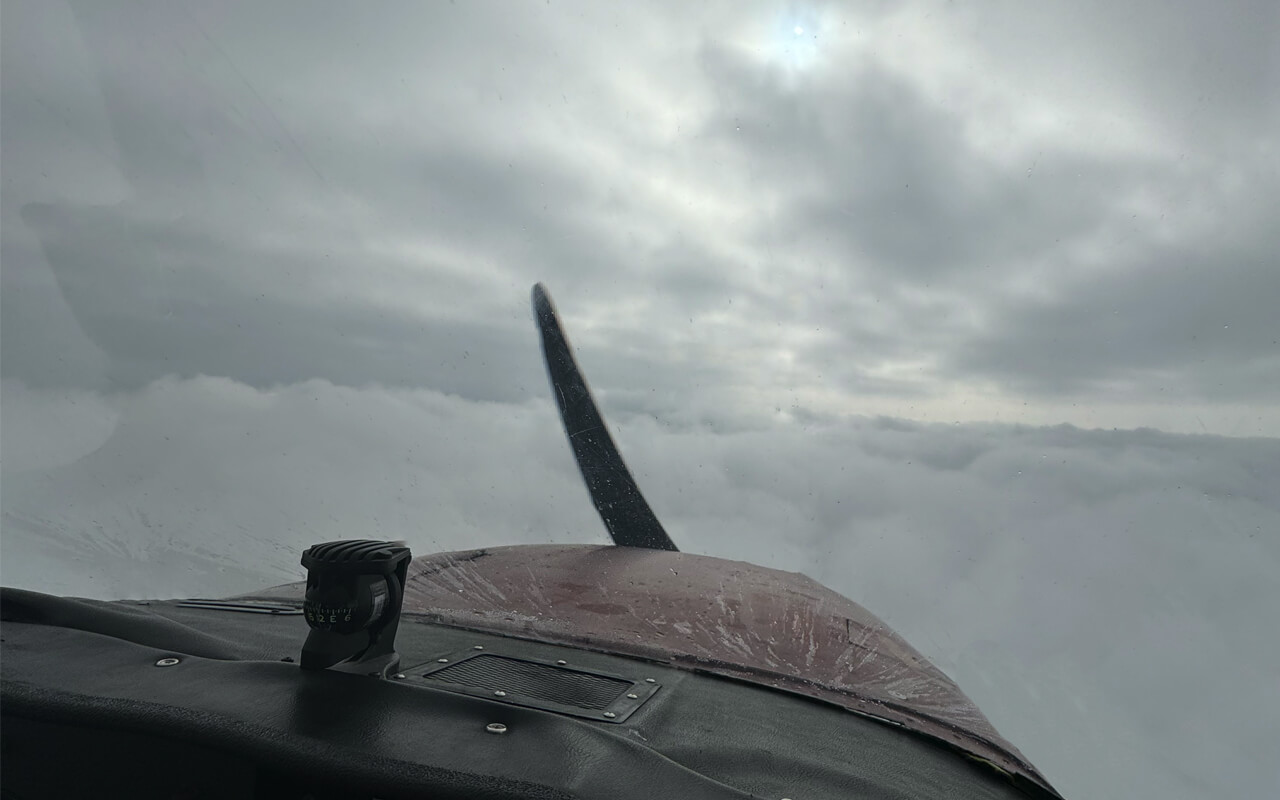
Break free from weather limitations. An Instrument Rating allows you to fly in clouds, low visibility, and conditions that ground VFR pilots. Required for airline careers and a major step up in capability for any pilot.
- Fly in clouds and low visibility
- Required for airline careers
- Precision flying skills
- More reliable travel
What Can You Do With an Instrument Rating?
An Instrument Rating lets you fly on the days the weather would otherwise cancel
Fly in Instrument Conditions
Navigate through clouds, fog, and low visibility using only your instruments, and fly published approaches down to minimums instead of waiting out the clouds.
Precision and Discipline
Instrument training is the direct answer to VFR flight into deteriorating weather. You learn a disciplined scan, tighter tolerances, and a procedure to fall back on, so an unexpected cloud layer becomes a plan instead of an emergency.
More Reliable Travel
Complete more trips as planned. An instrument-rated pilot can depart and arrive in conditions that would ground VFR pilots.
Career Advancement
Required for commercial operations and airline careers. Your instrument rating is essential for professional flying.
Safer at Night
Night strips away the horizon and visual references, which is how spatial disorientation happens. Instrument training teaches you to fly confidently by your panel and follow an approach all the way down, skills every night flight benefits from.
Foundation for Advanced Ratings
The natural next rating after your Private. It lays the foundation for the Commercial certificate, CFII, and the airlines. Most career pilots earn it first.
Requirements & Prerequisites
Here's what you need before starting your Instrument Rating
Pilot Certificate
- Hold at least a Private Pilot Certificate
- Or be training for PPL and IR concurrently
Flight Experience
- 50 hours of cross-country PIC time
- 40 hours of actual or simulated instrument time
Medical Certificate
- FAA Third-Class Medical (or higher), or BasicMed
- Same as your Private Pilot requirements
Knowledge Requirements
- Pass FAA Instrument Rating knowledge test
- Strong understanding of weather and navigation
Don't have enough cross-country time yet? We can help you build hours while preparing for your instrument training.
What's Included in Your Training
Comprehensive instrument training that builds confident IFR pilots
Ground School
Master instrument flying theory
- IFR regulations and procedures
- Weather theory and analysis
- IFR navigation systems
- Approach procedures
- ATC communication
- Emergency procedures
Flight Training
Hands-on instrument flying skills
- Basic attitude instrument flying
- IFR navigation and tracking
- Holding patterns
- Precision approaches (ILS)
- Non-precision approaches
- Partial panel flying
Checkride Prep
Final preparation for your IFR checkride
- Written exam preparation
- Oral exam practice
- Cross-country flight planning
- Mock checkrides
- Final stage check
Key Milestones
Instruments Only
Day 1Learn to trust your instruments
First Approaches
10-15 hoursFly your first ILS and VOR approaches
IFR Cross-Country
25-35 hoursFile and fly IFR cross-country
Checkride
40-50 hoursPass your FAA practical test
Transparent Pricing
Investment in the rating that transforms your flying
Flight Training
$8,875Ground Training
$1,599Materials & Fees
$1,325-1,725Costs vary with prior experience, proficiency, and how often you fly. Aircraft choice matters too: train in our Pipistrel Alpha from $180/hour, our standard 172s from $190/hour, or the glass-panel 172 (57H) at $205/hour. Every instrument training hour is with your CFII, in the airplane or our AATD simulator, and up to 20 simulator hours count toward the rating.
Build Your Own Estimate
Drag the sliders to see how training choices change your total. Same rates as the table above.
Below the 40 hours of instrument time the FAA requires (airplane plus up to 20 simulator hours). Fine if you already have instrument time in your logbook.
- $299
- $350
- $175
- Aircraft (0 hrs)$0
- Simulator (0 hrs)$0
- Instruction (dual + sim + ground)$0
- Fixed costs + DPE$0
An estimate, not a quote. Your pace and the weather get a vote too.
Talk through your plan with admissionsThis estimate covers instrument training flown with your CFII, in the airplane and the AATD simulator. The FAA also requires 50 hours of cross-country PIC time before the checkride; ask admissions about time building if you're short.
Frequently Asked Questions
Everything you need to know about earning your Instrument Rating
How long does it take to get an Instrument Rating?
Most students complete their Instrument Rating in 2-4 months with consistent training. The FAA requires 40 hours of instrument time, but the national average is around 50-60 hours. Many of our students finish in 45-55 hours.
Do I need my Private Pilot Certificate first?
You need to hold at least a Private Pilot Certificate before taking your instrument checkride. However, you can train for both concurrently. Many students start instrument training while building the cross-country time needed for their instrument rating requirements.
Is instrument training harder than private pilot training?
It's different. Instrument flying requires precision and trust in your instruments rather than visual references. Many students find the concepts more challenging initially, but with practice, it becomes second nature. The key is consistent training and good study habits.
Can I use a simulator for instrument training?
Yes! Up to 20 hours of your instrument training can be done in an approved simulator. This is a great way to practice approaches, holds, and procedures at a lower cost than flying the actual aircraft.
What weather can I fly in with an Instrument Rating?
An Instrument Rating allows you to fly in IMC (Instrument Meteorological Conditions) - clouds, fog, and low visibility. However, there are still limitations based on approach minimums, aircraft equipment, and pilot currency. You'll learn all about IFR weather limitations during training.
Is the Instrument Rating required for a career in aviation?
Yes, virtually all professional pilot positions require an Instrument Rating. Airlines, charter operators, and corporate flight departments all require it. Even if you don't plan to fly professionally, the instrument rating makes you a significantly safer and more capable pilot.
What's the hardest part of instrument training?
Most students say learning to trust their instruments over their senses is the biggest challenge. Your body can deceive you in the clouds, so you must learn to rely completely on what the instruments tell you. This is called 'spatial disorientation' and overcoming it is a key skill.
How do I stay current after getting my rating?
To stay IFR current, you need to complete 6 instrument approaches, holding procedures, and intercepting/tracking courses every 6 months. Many pilots use simulators or safety pilots to maintain currency, and our CFIIs can fly IFR proficiency work with you anytime.
130+ Five-Star Reviews Tell the Story
See Why Pilots Choose Us Over Other Schools
"As parents of a son graduating high-school, we didn't know the first thing about Flight School. We couldn't be happier with our son's experience in the Fast Track Program at US Flight Co. The process was seamless, the instructors were excellent, and he was able to complete his training in a year without sacrificing quality. At 19 years old, he is now a CFII at US Flight Co. A proud moment for our family. Highly recommend!"
"Pursuing a passion for flying is a significant investment of time and money. I did a lot of research before choosing US Flight Co. and I'm really satisfied with my decision. I was pleased to find great facilities, well maintained aircraft, kind and professional staff, and flexible and efficient scheduling. I started with no experience and was able to pass my private pilot check ride with no problem. The instructors are patient and professional and built my knowledge, skills, and confidence in a way that kept it light and fun the whole time."
"After having talked with several different flight schools and also several discovery flights, I chose US Flight Co because they were able to answer my questions and address my concerns with a unique approach rather than cookie cutter answers. They actually listened to me and adapted their training to fit my schedule. Whether you are going all the way to the airlines or just looking into a new hobby, US flight Co and the CFIs are genuinely interested in working with you as an individual."
"I started my aviation journey with US Flight Co last October and have been really pleased with the company as a whole, the administrative team, the instructors (S/O to Josh!!) and the pace of the program. About 8 months in, I'm preparing for my commercial check ride and hope to complete my CFI rating by next month."

"I am currently in the process of obtaining my private pilot's license at US Flight Co, and I couldn't be more impressed. The instructors are incredibly knowledgeable and supportive, making each lesson both informative and enjoyable. The training facilities are top-notch, and the aircraft are well-maintained and modern. I've felt a real sense of progress with every flight, and the team has created a welcoming atmosphere that fosters learning and confidence."
"Us Flight Co is a top flight school in Des Moines. I have been pursuing my private pilots license while finishing my senior year of high school. Because of navigating high school classes I was matched one on one with an instructor. This has been a great match and I appreciate the one on one learning I am receiving. US Flight CO's fleet of aircraft is diverse and expanding. As a student you have plenty of hours for flying and ground instruction. There is also flexibility to work with your school classes or employment hours."
"US Flight Co has been amazing with my aviation journey so far! Started flying at the end of 2024, currently working towards my instrument rating. They have been super flexible and easy to work with, considering I'm in the fast track program with a full time job. Instructors are safe, knowledgeable and fun to fly with. I look forward to continuing my aviation journey with them!"
"I Joined US flight Co about 10 hours into my PPL and have been with them since. My experience has been nothing but positive and they have far exceeded my expectations. They have great Instructors, reliable aircraft, great availability, and most importantly it's all at a very reasonable price. The instructor cadre are very clearly experts in their field and are passionate about ensuring their students are safe pilots and well prepared for their checkride. Aircraft rentals at US flight Co are well priced and well maintained. TLDR: Great people, fantastic instructors all at a reasonable price!"
"I have gone through other schools where I couldn't keep an instructor or the school didn't have their stuff together. US Flight Co has been the complete opposite - professional, organized, and committed to student success."
"Absolutely amazing crew of people. Great instructors who are all willing to help, even if they are not your primary instructor. Very relaxed environment and very personable people to train with. If you are looking for quality instruction look no further."
"Went on a discovery Flight here. Super nice facilities and Jaden my instructor was AMAZING! Would highly recommend. You can tell the instructors care and love their jobs! I wouldn't go anywhere else!"
"Having tried both flight schools based in Des Moines, I can honestly say this is the better of the two"
"I'm working to overcome a fear of flying! Jared has been more than helpful and patient with me. I highly recommend US Flight Co for anyone looking to overcome their fears or learn to fly!"
"I took part in the airline fast track program. It has been an incredibly fun and rewarding experience. I have worked with several CFIs and they are all top notch."
"Flight co has been super flexible with my schedule and has a great team of instructors who are very capable and knowledgeable. I had a great experience obtaining my private pilots license with them!"
Free Instrument Planning Session
Tell us your certificates, hours, and goals. An instrument instructor will reach out within one business day to map your fastest path to the rating.
How We Can Help
- Get your questions answered by a real pilot
- Schedule a tour of our facility at KDSM
- Map out your training timeline and costs
- Talk through financing options
Connect With Admissions
We'll reach out within one business day
Ready to Start? Schedule a Consultation
Meet with one of our admissions coordinators
Unlike primary training, instrument students already know how to fly. Schedule a consultation to discuss your goals, review your logbook, and create a personalized training plan.
- Review your flight experience
- Discuss training timeline
- Create personalized plan
- Answer all your questions
Already have significant instrument time? We can evaluate where you are and build a plan to get you to checkride.